
How Solar Panels Reduce Energy Costs
Solar panels offer a sustainable solution for businesses looking to lower their energy expenses. By harnessing renewable energy, companies can significantly reduce their reliance on traditional power sources and save on utility bills.
Lowering Electricity Bills
Solar panels generate electricity from sunlight, allowing businesses to produce their own energy and minimise monthly electricity costs.
Long-Term Savings
Investing in solar panels not only reduces immediate energy expenses but also leads to substantial long-term savings, especially with rising energy prices.
Incentives and Grants
Many businesses can benefit from government incentives and grants that support solar panel installations, further enhancing cost savings and improving return on investment.
The Solar Panel Installation Process
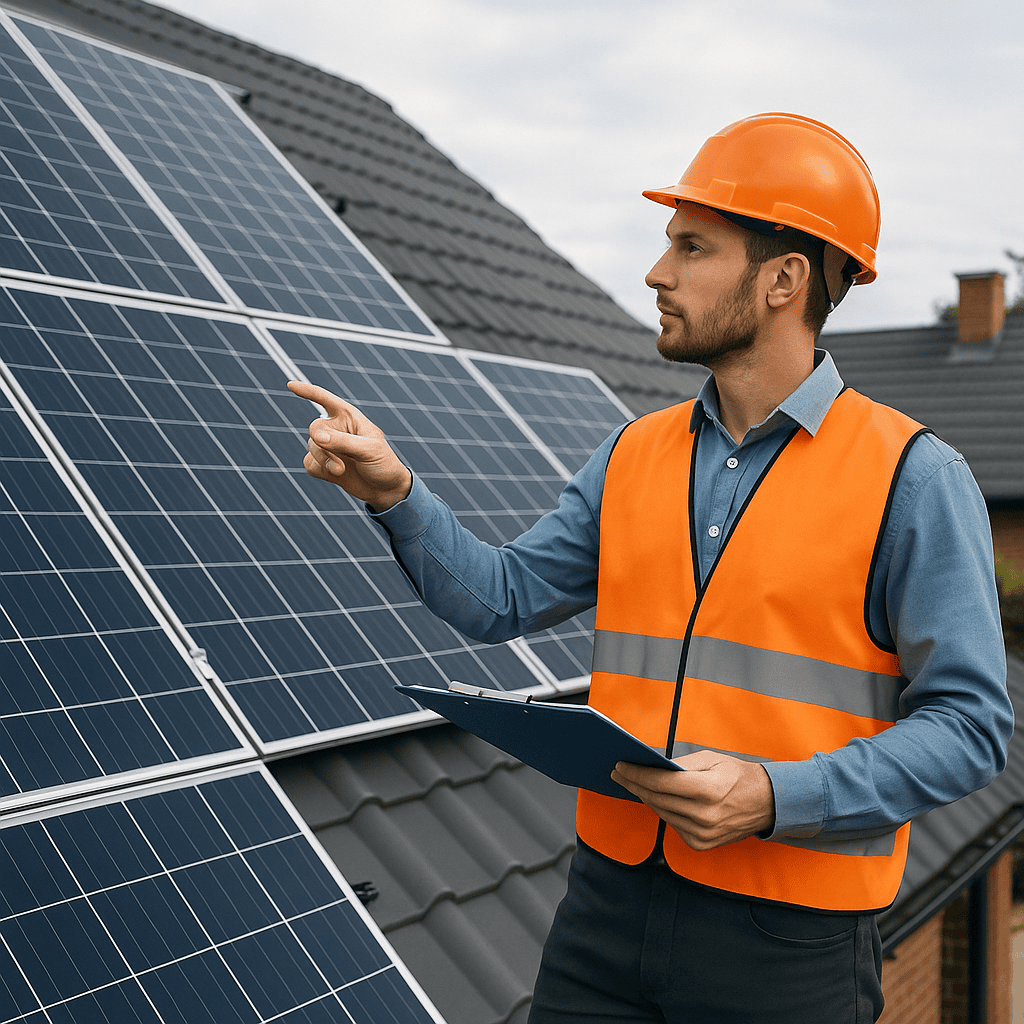
The journey to renewable energy with our company begins with a free site assessment, where our experts evaluate the feasibility of solar panel installation on your property. This stage involves analyzing the roof’s orientation, shading, and available space to ensure optimal solar energy capture. Our team will discuss your energy needs and financial goals to propose a tailored solar solution.
Following the assessment, we move on to the bespoke design phase. Here, we craft a solar panel system that maximizes efficiency and savings, taking into account factors like panel type and inverter technology. Our designs are both practical and innovative, reflecting our commitment to safe, high-quality work that adheres to the standards of the Renewable Energy Consumer Code.
Once the design is approved, our certified installation team steps in to bring your solar vision to life. We handle the entire installation process, ensuring minimal disruption to your daily routine. Post-installation, we provide ongoing maintenance to keep your system running smoothly, helping you save £800–£1,200 a year on energy bills while contributing to a sustainable future.
Solar Panel Diversity
There are over 60 different types of solar panels, each tailored to specific needs and environments.
Getting Started with Solar Panels
To begin exploring solar technology, the first step is to assess your energy needs and the suitability of your property for solar panel installation. Consider factors such as your average energy consumption, roof orientation, and shading from nearby trees or buildings. Conducting a site assessment will help determine the optimal solar panel system for your home or business, ensuring maximum efficiency and savings.
Next, research the different types of solar panels available, including monocrystalline, polycrystalline, and thin-film options. Understanding the advantages and disadvantages of each type will help you make informed decisions tailored to your specific requirements. Additionally, look into reputable installers who are certified and listed with the Renewable Energy Consumer Code, as they will provide quality workmanship and ongoing support. By gathering this information, you will be well-prepared to take the next steps toward harnessing solar energy.
Top 3 things about Solar Panel Types
Understanding the different types of solar panels is essential for making informed decisions about solar energy systems and their applications.
Monocrystalline Solar Panels
Monocrystalline panels are made from single-crystal silicon, offering high efficiency and space-saving designs, making them suitable for limited roof areas.
Polycrystalline Solar Panels
Polycrystalline panels consist of multiple silicon crystals, generally providing lower efficiency than monocrystalline but at a more affordable price point.
Thin-Film Solar Panels
Thin-film panels are lightweight and flexible, ideal for various applications, though they typically have lower efficiency and require more space for installation.
Top 5 Questions About Solar Panel Types
What are the different types of solar panels available for residential use?
There are three main types of solar panels for residential use: monocrystalline, known for their high efficiency and space-saving design; polycrystalline, which are more affordable but slightly less efficient; and thin-film, valued for their lightweight and flexibility, though generally less efficient.
How do monocrystalline, polycrystalline, and thin-film solar panels compare in terms of efficiency and cost?
Monocrystalline panels offer the highest efficiency and longevity but come at a higher cost. Polycrystalline panels are slightly less efficient and more affordable, while thin-film panels are the least efficient but the most cost-effective, making them suitable for specific applications.
What factors should I consider when choosing the right type of solar panel for my home?
Consider efficiency, cost, available space, and your energy needs when selecting solar panels. Additionally, evaluate the warranty and lifespan of the panels, as well as their performance in varying weather conditions to ensure optimal energy production for your home.
What are the advantages and disadvantages of each type of solar panel?
Monocrystalline panels offer high efficiency and space-saving benefits but can be more expensive. Polycrystalline panels are more affordable but slightly less efficient. Thin-film panels are lightweight and flexible, ideal for specific applications, yet generally have lower efficiency and shorter lifespans.
How do the costs of various types of solar panels impact overall solar energy system pricing?
The costs of different solar panel types, such as monocrystalline, polycrystalline, and thin-film, significantly influence the overall pricing of solar energy systems. Higher efficiency panels may have a greater upfront cost but can lead to long-term savings through increased energy production.