
How Solar Panels Reduce Energy Costs
Understanding the financial benefits of solar panels is essential for businesses seeking to optimise energy expenditures. Both photovoltaic and solar thermal systems offer unique advantages in reducing overall energy costs.
Photovoltaic Systems and Cost Savings
Photovoltaic systems convert sunlight into electricity, significantly lowering your energy bills by generating power on-site and reducing reliance on grid electricity.
Solar Thermal Systems for Heating Savings
Solar thermal systems harness solar energy to heat water, leading to substantial savings on heating costs, particularly for businesses with high hot water demands.
Long-term Financial Benefits
Investing in solar technology enhances energy efficiency, providing long-term savings and potential returns through government incentives and reduced operational costs.
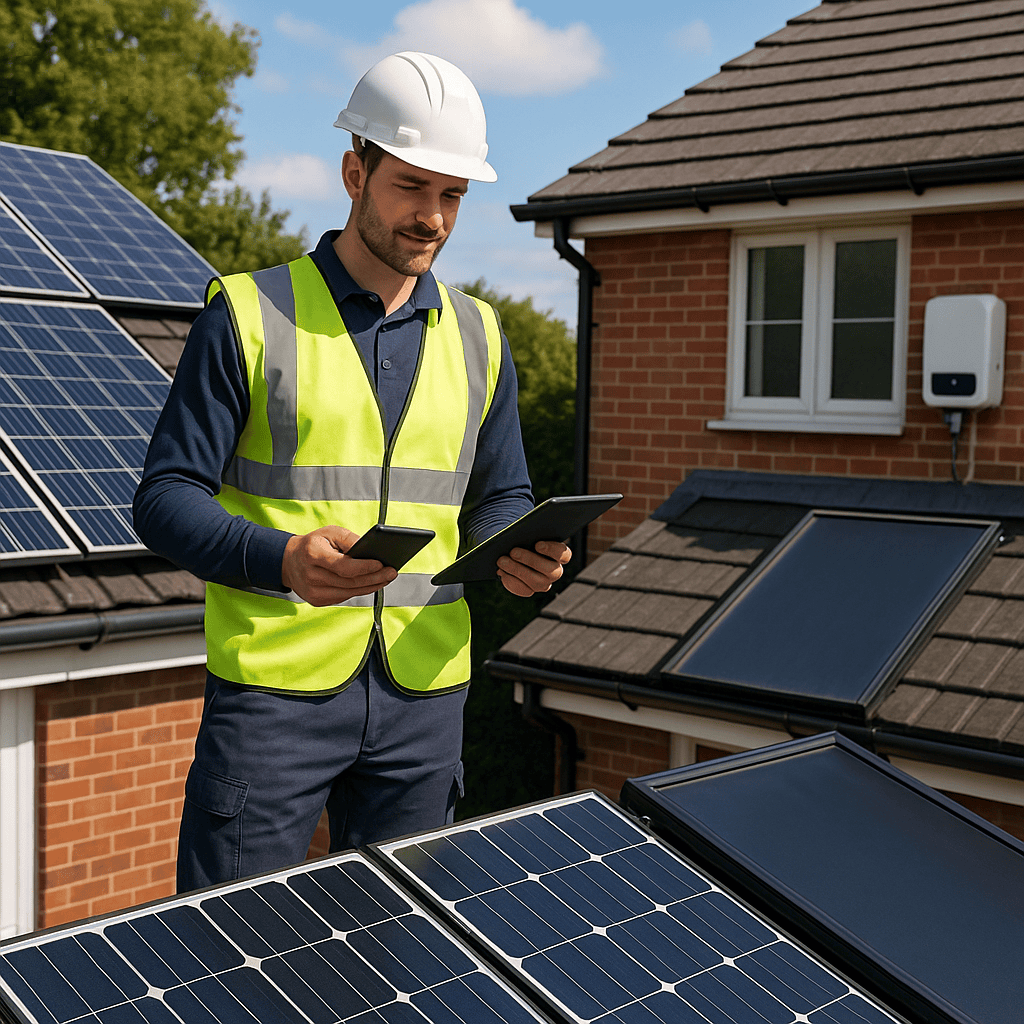
The Solar Implementation Process
Embarking on the journey of solar energy installation begins with a comprehensive site assessment. Our expert team conducts a free evaluation of your property to understand its solar potential and energy needs. This crucial first step ensures that our bespoke design will be both effective and efficient, tailored specifically to your home or business’s requirements. We employ state-of-the-art technology to map out the most optimal placement for solar panels and battery storage systems.
Once the assessment is complete, our certified professionals move on to the design and installation phase. We prioritize safety and quality, utilizing premium materials and skilled craftsmanship. Our team is certified and adheres to the standards set by the Renewable Energy Consumer Code, ensuring a seamless installation process. This phase is meticulously planned to minimize disruption to your daily routine while maximizing energy savings.
After installation, our commitment to your solar energy system doesn’t end. We offer ongoing maintenance and support to ensure your system operates at peak performance. Our comprehensive service includes regular check-ups and prompt attention to any issues that may arise. With our end-to-end service, homeowners can enjoy significant savings on energy bills, typically ranging from £800 to £1,200 annually, all while contributing to a more sustainable future.
Solar Showdown
Solar PV converts sunlight into electricity, while solar thermal uses sunlight to heat water or air directly.
Getting Started with Solar Technology
To explore solar technology, begin by understanding the two primary systems: photovoltaic (PV) and solar thermal. PV systems convert sunlight directly into electricity, making them ideal for generating power for your home or business. In contrast, solar thermal systems capture heat from the sun to provide hot water or heating for your property. Assess your energy needs and consider which system aligns best with your goals, whether it’s reducing electricity bills or enhancing your heating efficiency.
Next, conduct a thorough evaluation of your property’s suitability for solar technology. This includes analyzing your roof space, orientation, and any potential shading from trees or buildings. Engaging with a reputable renewable energy company can provide insights into the best options for your situation. By taking these initial steps, you’ll be well-equipped to make informed decisions about integrating solar technology into your home or business, paving the way for greater energy independence.
Top 3 things about PV vs Solar Thermal
Understanding the differences between photovoltaic and solar thermal technologies is essential for making informed decisions about renewable energy options.
Different Energy Outputs
Photovoltaic (PV) systems convert sunlight directly into electricity, while solar thermal systems use sunlight to heat water for domestic or industrial use.
Installation and Space Requirements
PV panels typically require more space for installation compared to solar thermal systems, which can be more compact and suitable for smaller properties.
Cost and Efficiency Considerations
The initial costs and efficiency rates vary; PV systems generally have higher upfront costs but can offer greater long-term savings through electricity generation.
Top 5 Questions About PV and Solar Thermal
What are the key differences between PV and solar thermal technologies?
PV technology converts sunlight directly into electricity using solar panels, while solar thermal systems capture sunlight to heat water or air for residential or commercial use. Each serves different energy needs and applications within the renewable energy sector.
How do the costs of PV systems compare to solar thermal systems?
PV systems generally have higher upfront costs compared to solar thermal systems, primarily due to the technology and materials involved. However, PV systems typically offer greater long-term savings through electricity generation, while solar thermal systems focus on heating water.
What factors influence the efficiency of PV versus solar thermal systems?
Efficiency is influenced by factors such as sunlight intensity, temperature, system design, and maintenance. PV systems convert sunlight directly into electricity, while solar thermal systems rely on heat absorption, making their performance dependent on ambient conditions and insulation quality.
Which solar technology, PV or solar thermal, is better for residential use?
The choice between PV and solar thermal depends on your needs. PV systems generate electricity, ideal for reducing energy bills, while solar thermal systems provide hot water. Assess your energy requirements and budget to determine the best fit for your home.
What are the long-term savings associated with choosing PV over solar thermal?
Choosing PV systems typically leads to greater long-term savings due to lower maintenance costs and the potential for energy bill reductions through electricity generation. Additionally, surplus energy can be sold back to the grid, enhancing overall financial benefits.
