
Getting Started with Solar for Your Farm
To begin harnessing solar energy for your agricultural operation, the first step is to conduct a comprehensive site assessment. This involves evaluating your farm’s energy needs, available space for solar panel installation, and the orientation of your buildings and fields. Understanding your current energy consumption and future requirements will help in designing a tailored solar solution that maximizes efficiency and cost savings.
Once you have a clear understanding of your energy profile, the next step is to explore different solar panel options and battery storage systems that fit your specific needs. Consulting with a reputable renewable energy provider can offer insights into the best technologies available, as well as potential grants and incentives for agricultural businesses. Engaging in this process not only helps you to make informed decisions but also positions your farm to benefit from long-term energy savings and sustainability.
Maximize Farm Efficiency with Solar Power
Adopting commercial solar panels for your farm can revolutionize agricultural operations, offering both economic and environmental benefits tailored to your unique needs.
Reduce Energy Costs
Solar panels significantly cut electricity bills, allowing farms to allocate savings to other essential operational areas.
Enhance Sustainability
Utilizing solar energy minimizes carbon footprint, aligning farming practices with eco-friendly and sustainable agriculture trends.
Increase Energy Independence
Solar systems provide reliable energy, reducing reliance on grid power and vulnerability to fluctuating energy prices.
Improve Crop Yield Management
Solar technology supports precision agriculture, powering advanced irrigation and monitoring systems for optimal crop growth.
Boost Farm Value
Investing in solar infrastructure enhances property value and appeal, offering long-term financial benefits and market competitiveness.
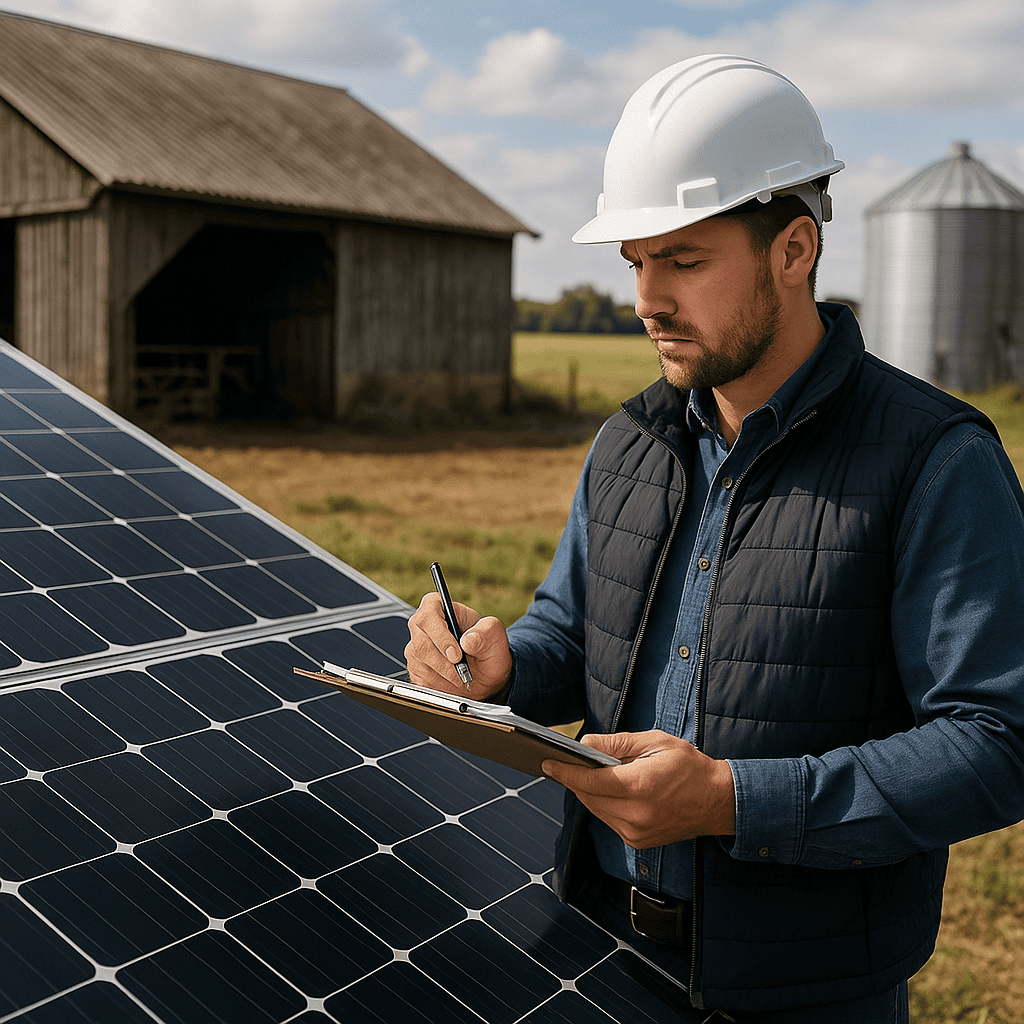
Solar Installation Process for Agricultural Operations
The process of integrating solar energy into your agricultural operation begins with a comprehensive site assessment. Experts evaluate your farm’s energy needs, available space, and sunlight exposure to design a customized solar solution. This step is crucial to ensure maximum efficiency and cost-effectiveness.
Once the design is finalized, the installation phase begins. Skilled technicians install solar panels and necessary equipment, ensuring minimal disruption to your daily operations. They work efficiently to integrate the system seamlessly with your existing infrastructure, adhering to all safety and quality standards.
After installation, the system undergoes thorough testing to confirm optimal performance. The final step involves training you and your team on system operation and maintenance. This ensures you can maximize the benefits of solar energy, reducing electricity costs and enhancing sustainability for your agricultural business.
Sunny Savings
Solar panels can reduce farm energy costs by up to 75%, boosting sustainability and profits for agricultural operations.
Top 5 Questions About Solar Energy for Farms
What are the benefits of installing solar panels for farms and agriculture?
Installing solar panels can significantly reduce energy costs, enhance sustainability, and provide energy independence for farms. Additionally, they can improve operational efficiency and potentially generate extra income through government incentives and selling surplus energy back to the grid.
How do commercial solar panels improve energy efficiency in agricultural operations?
Commercial solar panels reduce reliance on grid electricity, lowering energy costs and enhancing sustainability. By generating renewable energy on-site, farms can power equipment, irrigation systems, and other operations more efficiently, ultimately improving overall productivity and reducing carbon footprints.
What types of solar panel systems are best suited for agricultural use?
Ground-mounted solar arrays and rooftop solar systems are ideal for agricultural use, providing efficient energy generation while utilising available space. These systems can support various farm operations, from powering equipment to reducing energy costs, enhancing sustainability in agriculture.
How can farms finance the installation of solar panels for commercial use?
Farms can finance solar panel installation through various options, including government grants, low-interest loans, and leasing agreements. Additionally, some energy companies offer tailored financing solutions to help agricultural businesses adopt renewable energy efficiently.
What incentives are available for agricultural businesses to adopt solar energy solutions?
Agricultural businesses can benefit from various incentives, including the Smart Export Guarantee (SEG), which pays for surplus energy exported to the grid, and grants or funding options from government schemes aimed at promoting renewable energy adoption in farming.